
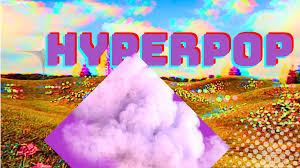
Hyperpop is taking the music world by storm, and Food House perfectly embodies its irreverent spirit.
Their track Metal opens with the line, “Hey Siri, is Ronald Reagan dead?”
Siri’s response “Ronald Reagan was born Feb. 6, 1911 and died June 5, 2004” elicits a resonant “thank f****** God” from the duo.
This playful irreverence perfectly captures hyperpop’s subversive spirit.
The genre thrives online as a microgenre defined by surreal lyrics, overblown bass, and high-pitched vocals.
The genre traces its roots to mid-2000s electronic music, with early influences from artists like Grimes, Sleigh Bells, and even Kesha.
It gained traction with the rise of A.G. Cook’s P.C. Music label in 2013, which marked the start of experimental pop’s broader influence.
Soon, artists such as Charli XCX, SOPHIE, and 100gecs further popularized the sound.
Today, Spotify’s “hyperpop” playlist acts as a launchpad for emerging artists exploring this ever-evolving style.
The Sound of Hyperpop
So, what does it sound like?
It is deliberately strange. Critics often describe it as unlistenable noise.
The genre typically follows the conventional pop song structure but pushes every other element to the extreme.
Glitches, metallic synths, and distorted vocals are common, but the genre’s defining feature is its refusal to conform.
Moreover, hyperpop defies strict categorization.
Many artists fuse elements of rock, metal, trap, and hip-hop into their tracks.
Laura Les of 100gecs notes that the genre has evolved to be flexible, encompassing a broad range of styles, which makes it harder to pin down.
This fluidity reflects hyperpop’s core principle: subverting both form and content.
Media outlets such as The New York Times, Vice, and Pitchfork have increasingly covered hyperpop, questioning whether it represents the future of pop.
Part of the reason is its connection to a generation shaped by technology, neoliberalism, individualism, and capitalism.
The genre thrives online, particularly within queer communities, exploring social media angst and resisting preestablished norms.
Read more: HARMONY Marks the UN’s 80th Anniversary in Music
Starts from Internet
The internet forms hyperpop’s foundational framework.
Independent artists experiment with home-produced music and online distribution.
For example, osquinn released the track Bad Idea, which drew inspiration from a Twitter argument.
The song quickly gained attention and reached one million Spotify listeners in just a few months.
This level of success is particularly remarkable for an independent artist.
This accessibility makes the genre democratic and explains its diversity of styles.
During the 2020 quarantine, many hyperpop albums were produced rapidly from home, highlighting the genre’s adaptability.
Nick Canovas from Mic the Snare describes hyperpop as “extremely online™®©.”
He explains that the genre reflects the struggle of living in an overly technological world.
Social media, he notes, offers users multiple versions of themselves, but each version comes with its own limitations.
It also critiques capitalism and consumerism.
Rina Sawayama’s XS critiques conventional wealth markers, while Grimes’ Miss Anthropocene confronts the immense threat of climate change.
Notably, many prominent hyperpop figures are transgender.
By disrupting conventional sound and visual culture, these artists also challenge norms around gender performance and identity.
Songs like Arca’s Nonbinary, Dorian Electra’s Emasculate, SOPHIE’s Faceshopping, and Kim Petras’ TRANSylvania explore gender through a hyperpop lens.
With its postmodern, surreal lyrics, the genre mirrors the experiences of the first generation raised online.
Academic fields like Cultural Studies and Media Studies could gain valuable insights from studying hyperpop.
The genre challenges traditional ideas of representation and identity.
In today’s digital era, it offers a unique lens to explore how online culture shapes self-expression.
At NYUAD, for example, students should explore both the technical and cultural aspects of hyperpop to better understand contemporary pop music.
A Voice to Social Media Generation
Ultimately, hyperpop gives voice to a generation shaped by social media, online culture, and imposed gender and sexuality categories.
Hyperpop aligns closely with queerness, anti-capitalist values, and environmental awareness.
This alignment allows the genre to challenge conventional ideas about technology.
It also questions traditional notions of representation in music and culture.
Most importantly, it democratizes music production, offering independent artists a platform to innovate.
As the genre hyperpop slowly breaks into the mainstream, its diverse and unconventional aesthetics are gaining attention.
These bold sounds and visuals are shaping the next generation of pop artists.
They inspire musicians to pursue original, daring, and revolutionary paths in their work.
This genre not only pushes boundaries, it may also point to the future of music itself.

A bunch of electronic dance music lovers who wants to share news from Indonesia to the world.