
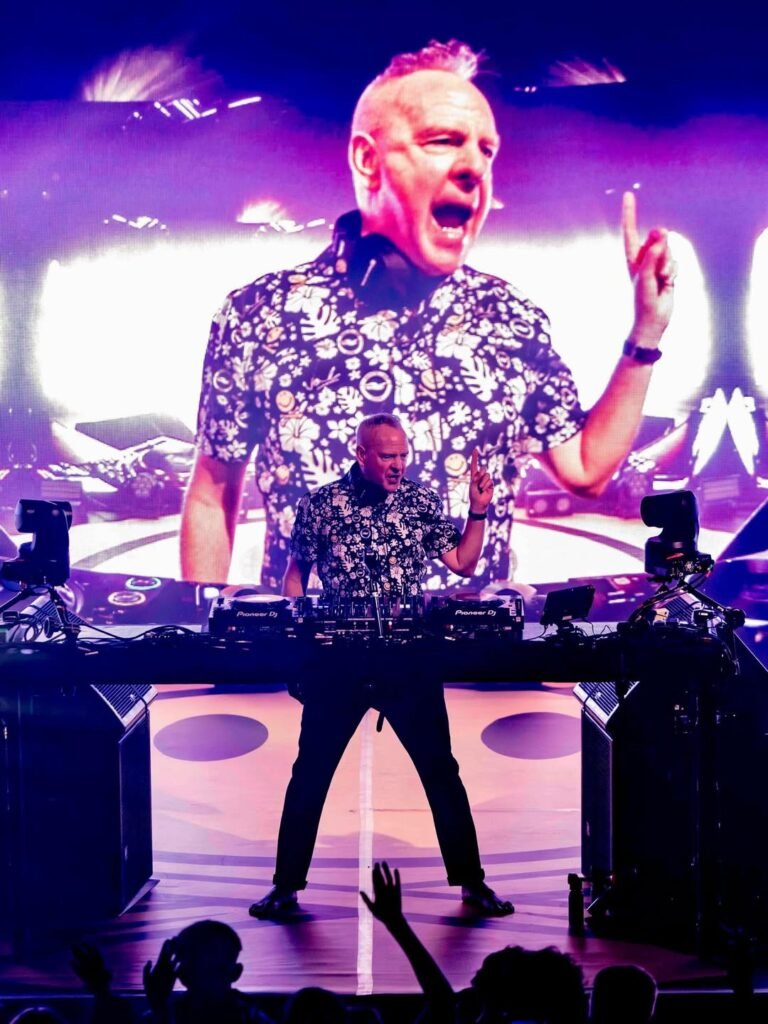
Fatboy Slim has spent decades watching the same patterns unfold on dance floors.
Over time, he has come to believe that this repetition may actually define the essence of rave culture itself.
During a candid conversation ahead of his Coachella 2026 performance, the legendary DJ explored a hypothetical idea.
If “Eat, Sleep, Rave, Repeat” shaped a generation, what would its modern follow-up look like?
Rather than continuing the story forward, he shifted the perspective entirely.
He suggested that a prequel would make more sense, explaining that iconic works often revisit their origins to explain how everything began.
Originally released in 2013 alongside Riva Starr and Beardyman, “Eat, Sleep, Rave, Repeat” became his first UK Top 10 hit in over a decade.
Since then, the track has grown beyond music and turned into a cultural reference point.
Read more: “Adagio For Strings” Returns with a 2026 Twist
Fatboy Slim Reflects The Song
Fatboy Slim, whose real name is Norman Cook, sees the track as something timeless.
He believes its meaning remains as strong today as it was when he first entered the scene nearly 50 years ago.
He explained that while trends, sounds, and technology continue to evolve, the core drive behind raving stays the same.
People still seek connection, escape, and shared energy through music.
According to him, this instinct goes beyond eras and reflects something deeply human.
When imagining a “prequel,” he pushed the idea even further back in time.
He described it as a return to humanity’s earliest encounters with rhythm and sound.
In his view, the first sense of raving may have come from simple actions, like hitting a surface and reacting to its echo.
From that moment, people began to move, connect, and celebrate together.
Although no actual prequel project exists, his vision reveals how deeply he has considered the roots of rave culture.
Whether or not the idea ever becomes reality, his perspective highlights a clear point.
Long before technology shaped dance music, the urge to gather, move, and lose oneself in sound already existed, and it still does today.

A bunch of electronic dance music lovers who wants to share news from Indonesia to the world.