
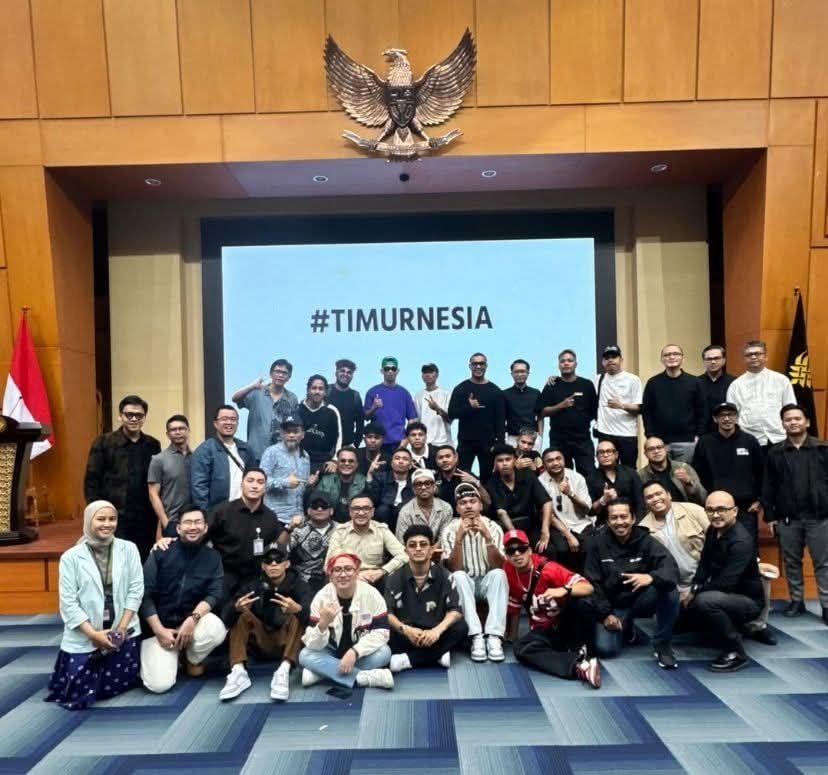
Timurnesia marked a turning point for Eastern Indonesian music.
It signaled a shift away from being heard only on playlists and small community stages.
For the first time, that sound stepped confidently into the halls of government.
On Tuesday, January 27, 2026, the Indonesian Ministry of Culture felt different.
The building turned into a shared space for ideas.
Beats, traditions, and conversations finally met on the same frequency.
Gathering Ideas for Eastern Indonesia Music
The gathering took place through a forum titled Peta Jalan Ekosistem Musik Indonesia Timur dalam Kebijakan Kebudayaan Nasional.
Musicians from the eastern regions came with a clear purpose.
They were not there to audition or seek approval.
Instead, they came to claim their space.
They sat with state representatives and spoke openly about the future of Eastern Indonesian music, without small talk or hesitation.
Several well-known public figures attended, including Giring Ganesha, Yovie Widianto, and Deddy Corbuzier.
However, the real spotlight fell on Eastern Indonesian musicians and music advocates who have worked quietly but consistently for years.
They create music beyond the industry’s radar, yet their work continues to carry strong cultural spirit.
Read more: Dee Lestari Revives Perahu Kertas as a New Single
Timurnesia, A New Collective for Eastern Indonesia Music
During the forum, a new collective identity emerged: Timurnesia.
Silet Open Up introduced the name, and it quickly resonated as a shared symbol.
The name does not represent a genre or a label.
Instead, it reflects a mindset, a collective voice from the East that no longer wants to be treated as a mere “extra color.”
Toton Caribo explained that Timurnesia goes beyond a catchy name for merchandise or social media.
He described it as a shared umbrella for struggle.
According to him, Eastern Indonesian music does not seek sympathy.
It only asks for equal recognition in policy, access, and opportunity.
Musicians such as Dody Latuharhary, Justy Aldri, Jackson Seran, Juan Reza, Wizz Baker, and many others also shared their views.
Their message remained clear and direct.
If the country can seriously build a national music industry, they questioned why half of Indonesia still feels sidelined.
The forum served as a reminder that regional music is not just about nostalgia.
It continues to live, evolve, and connect with today’s generation.
The question now is how far the state is willing to listen.
This meeting may not have sparked a revolution yet.
Still, one thing is certain. Timurnesia has stepped onto the stage.
This time, it is not only performing on music stages, but also sitting at the policy table.
