
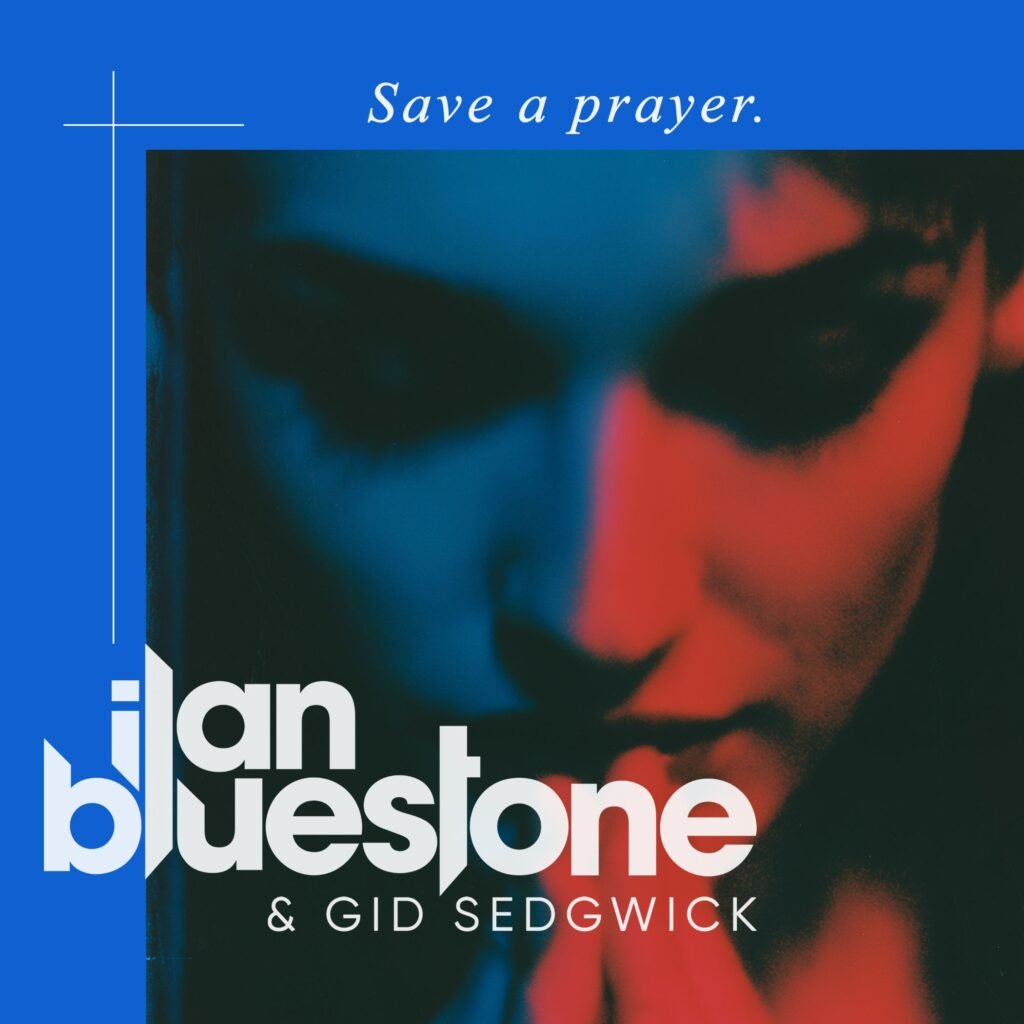
Ilan Bluestone has spent the past few years drifting toward the warmth of ’80s synths, threading that influence through tracks like “Paid For Love,” “Can You,” and “Slow Down.”
That pull eventually led him to one of the decade’s most enduring songs: Duran Duran’s “Save A Prayer.”
Working alongside vocalist Gid Sedgwick, Ilan Bluestone rebuilt the track from memory rather than close imitation, pushing it into progressive territory while holding onto the vulnerability that made the original last more than four decades.
He talk through the process with us, from the first spark of the idea to what he hopes new listeners take away from it.
1. What made you choose Duran Duran’s “Save A Prayer” as the song you wanted to reinterpret, especially given how iconic the original has become?
It was one of my favourite tracks growing up. My brother had it on cassette, and I remember hearing it when I was really young and just loving it. There was something about the simplicity of those ’80s synths and that melody that always stayed with me. So eventually, I just had to try recreating it with my own touch. I wouldn’t really call my version trance either. For me, it sits much more on the progressive side.
2. You’ve mentioned that you have been gravitating toward ’80s-inspired sounds through tracks such as “Paid For Love,” “Can You,” and “Slow Down.” What is it about the sound and songwriting of the ’80s that continues to attract you?
It’s really the sound of the synths from that period. Something as simple as switching on a Juno and playing a few chords can immediately make me want to write music. There’s a warmth and character to those old synths that I’ve always loved. You don’t necessarily need hundreds of layers. Sometimes one great synth sound and a strong melody is enough to give you an idea for an entire record.
3. You started writing “Slow Down” with Gid Sedgwick back in 2019, and that track leaned even further into synthwave. How did the experience of making “Slow Down” influence the way you approached “Save A Prayer”?
“Slow Down” definitely showed me how well Gid’s voice works with that ’80s-influenced sound. There’s a natural character to his voice that fits that world without it feeling forced or like he’s trying to imitate somebody. So when I decided to work on “Save A Prayer,” Gid felt like the obvious person to do it with. We already knew that combination worked really well between us.
4. What was the division of roles between you and Gid during the production of “Save A Prayer”? Did you start from the instrumental or from Gid’s vocal interpretation?
I took care of the production, and Gid handled the vocal. I rebuilt the music from scratch and actually tried not to keep going back and listening to the original while I was doing it. I wanted to see where my own memory of the record would take me rather than copying every sound and detail. Towards the end, I went back to the original and made sure Gid’s vocal had the right feeling, and that we hadn’t lost what made the song so special in the first place.
5. The original song is relatively slow and atmospheric, while your version brings considerably more tempo and energy. How did you approach that without losing the emotional identity of the song?
The most important thing at the beginning was getting that melody to sit properly with the groove. That was really the key. If the melody didn’t feel natural at the new tempo, nothing else was going to work. I spent a lot of time getting that relationship right, and once I had it, everything else started falling into place. From there, it was really about building the production around the melody rather than trying to force the original into a faster record.
6. Was there a particular moment during production when you felt, “Okay, now this actually sounds like an Ilan Bluestone version of ‘Save A Prayer'”?
I don’t actually know what an “Ilan Bluestone version” is! I never really think about my music like that when I’m making it. I just keep working until something feels right to me. I think the moment the melody started sitting properly with the groove, and I could play it from beginning to end without wanting to change everything, I knew we had something.
Read more: Ilan Bluestone Reimagines Duran Duran’s “Save A Prayer”
7. “Save A Prayer” has survived for more than four decades and is still strongly associated with Duran Duran. Did that legacy create any pressure when you were working on your version?
No, not really. I never let anything like that stress me out, because otherwise I just wouldn’t work on it. Obviously, I have a huge amount of respect for the original, especially because I grew up loving it, but I didn’t want that to become pressure. I approached it because I love the song and wanted to see what I could do with it. If I’d spent the whole time worrying about what people might think, I probably would never have finished it.
8. The original song has a bittersweet and vulnerable quality. Did you consciously try to preserve that emotional vulnerability in the new production?
Yes, definitely. I wanted to keep the feeling as close as possible to the original, because that emotion is such a huge part of why the song works. Even though the production and groove are different, I didn’t want to completely reinvent the emotional side of it. Especially with Gid’s vocal, it was important that you could still immediately feel the original song coming through.
9. Duran Duran have continued to embrace electronic and dance-oriented reinterpretations of their music. Do you see an interesting connection between Duran Duran’s legacy and today’s electronic music scene?
Definitely, and I actually think we need more of that ’80s sound in electronic music, which is partly why I wanted to make this. There was something really special about the combination of electronic instruments and proper songwriting in that period. Those records had amazing synth sounds, but underneath all of that, they were great songs. I think there’s still so much we can take from that era and bring into modern electronic music.
10. Your version introduces the song to listeners who may know the electronic scene but not necessarily Duran Duran. What do you hope those listeners discover about the original?
I’d love someone to hear our version and then go back and listen to the original, especially if they’ve never really explored Duran Duran before. There’s a reason a song like “Save A Prayer” still connects with people more than 40 years later. Hopefully, our version can be a doorway for a younger audience to discover the original, and maybe some of their other music as well.
11. You’ve now explored ’80s-inspired sounds through several different projects. Is this becoming a distinct creative direction for you, or do you see it simply as one influence among many?
I think it’s just naturally part of my sound because it’s music I’ve always loved. I don’t sit down and decide that I’m going to make an ’80s record. Sometimes I’ll hear a particular synth sound or play something on a Juno, and suddenly it takes me in that direction. I like being able to move between progressive music, trance, and other influences without having to decide exactly what something is before I make it.
12. After “Save A Prayer,” are there any other classic songs or artists from the ’80s that you would love to reinterpret in your own sound?
Depeche Mode, for sure. They’re probably my favourite band from that era and have been a massive influence on me. The synth work, melodies, darker atmosphere, and songwriting are incredible. There are so many of their records I’d love to get my hands on one day, but with something that iconic, I’d only do it if I genuinely felt I could bring something different to it rather than just making another remix.
Thank you Ilan Bluestone for a chance talking with us! Catch “Save A Prayer”, a rework from Ilan Bluestone and Gid Sedgwick in your favorite digital streaming platform.
Disclaimer: This article has undergone light grammar editing to ensure consistency in punctuation and sentence structure. The content of the answers remains true to the source’s original statements.

A hiatus raver. Loves to hear Trance and Progressive tracks, but always dance no matter what is the genre