
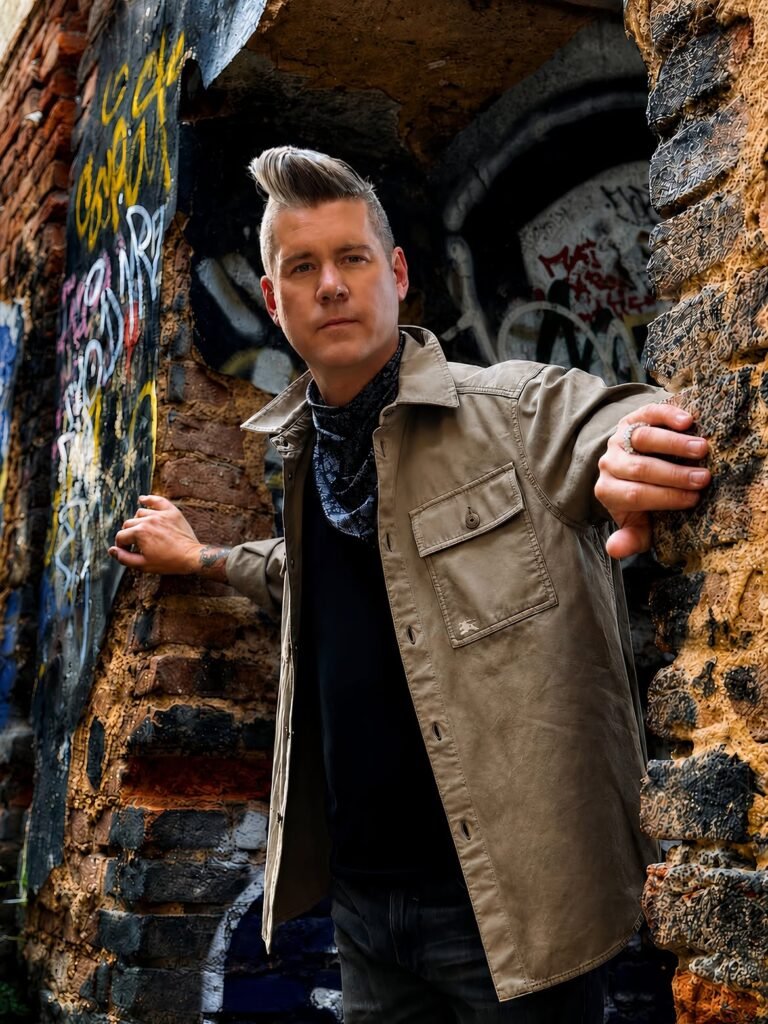
Jairic continues to blur the lines between hip-hop and electronic music.
Following collaborations and remixes from KRONO and NERVO, the Detroit-born artist has introduced his music to a wider global audience.
In this exclusive interview with Rave Colony, he discusses remix culture, AI in music, the future of hip-hop, and a chance to perform at major EDM festivals.
Hi Jairic, nice to have a chance to talk to you! Can you introduce yourself to our readers in Indonesia?
Hey, I’m Jairic. I grew up in Detroit and now split my creative life between there and the French Riviera. My music lives somewhere between hip-hop, electronic music, and cinematic storytelling, and I’m really excited to share it with listeners in Indonesia.
The remix of your song, Don’t Let Me Put a Track On You, received a remix treatment from NERVO. Can you tell us how it started?
Our teams connected, and as NERVO put it, they “caught a vibe” with the track. They took the energy that was already there and transformed it into an incredible record. I couldn’t have been happier with how it turned out.
Many artists see remixes as a promotional tool, but they can also be a form of creative collaboration. How do you see remixes, especially after hearing KRONO’s and NERVO’s interpretations of Don’t Let Me Put a Track On You?
For me, it’s been a great experience. While remixes are a fantastic way to introduce your music to new audiences, I’ve always seen them as a creative collaboration first. It’s exciting to hear another artist reinterpret your work and explore the same song from a completely different angle. That’s what both KRONO and NERVO did, and I love that each remix has its own identity.
When another artist remixes one of your songs, how much creative freedom do you like to give them? Do you prefer them to stay close to the original, or completely reinvent the track?
I give artists a lot of discretion, especially people I have a high regard for. If they’re going to remix one of my records, I want to hear their perspective. That’s what makes it exciting.
With your music now crossing into the electronic scene through remixes, would performing at major EDM festivals be something you’d like to pursue? If so, what kind of live experience would you want to create for that audience?
Absolutely. Performing at a major EDM festival would be incredible. There’s something special about the energy of thousands of people, the lights, the production, and everyone sharing the same moment. I’d want to create a performance that feels cinematic, high-energy, and leaves people walking away with a memory, not just another set.
Let’s talk about hip-hop. Hip-hop has evolved dramatically over the past decade, with streaming, social media, and genre-blending reshaping the culture. As an artist, how do you see the current state of hip-hop, and where do you think it’s headed next?
Honestly, I try not to spend too much time predicting where hip-hop is headed. I’d rather focus on making music that inspires me, challenges me creatively, and tells stories I’m proud of. If I can keep creating records I believe in and performing them in unique places around the world, I’ll be happy wherever hip-hop goes next.
Read more: NERVO Reimagines Jairic’s ‘Don’t Let Me Put A Track On You’
Your collaborations with KRONO and NERVO introduced your music to a wider electronic audience. How do you view the relationship between hip-hop and dance music today, and do you think the boundaries between the two genres are becoming less relevant?
I think it’s incredible to collaborate with artists from different genres. Genre-blending has been happening for a long time, and some of the most memorable music comes from people willing to experiment. If a collaboration feels authentic and pushes the music somewhere new, I’m all for it.
Artificial intelligence is becoming an increasingly common tool in music creation. Do you see AI as a creative opportunity, a potential threat, or simply another tool that artists need to learn how to use?
I don’t use AI to create my music. For me, writing, producing, and storytelling are the parts I enjoy most, and I want those to come from real life and real experiences. That said, I think AI is another tool, and like any tool, it’s all about how people choose to use it.
You’ve built your career across two very different music markets. How would you compare the music industry in France with the one in the United States, particularly for independent artists?
I think great music can be appreciated anywhere in the world. I’ve been fortunate to find an incredibly engaged audience across Europe, and that’s been an amazing experience for me and my family. At the end of the day, whether it’s France, the United States, or somewhere else, people connect with music that feels honest.
You’ve mentioned that living in Cannes has influenced your sound. Beyond the production, has it also changed the way you write lyrics or tell stories through your music?
Absolutely. More than 300 days of sunshine definitely help. The travel, food, culture, and pace of life have all given me new settings, details, and perspectives to write from, so the stories naturally feel a little broader.
After working with KRONO and NERVO, are you interested in collaborating with more DJs and electronic producers? Is there anyone on your wish list you’d love to work with next?
Absolutely. It’s been an amazing experience working with both KRONO and NERVO, and I’d love to collaborate with more DJs and electronic producers. David Guetta and Steve Aoki would be incredible. I also saw Fisher perform in Medellín, Colombia, with a close friend, and the energy of that show was unforgettable. Working with him someday would be amazing.
With collaborations spanning hip-hop and electronic music, Jairic continues to embrace new opportunities without losing sight of his artistic identity.
Whether through original releases or future collaborations with DJs and producers, his journey is one to watch.
Editor’s Note: This interview has been lightly edited for grammar, clarity, and readability while preserving the original meaning and intent of the interviewee’s responses.

A bunch of electronic dance music lovers who wants to share news from Indonesia to the world.