
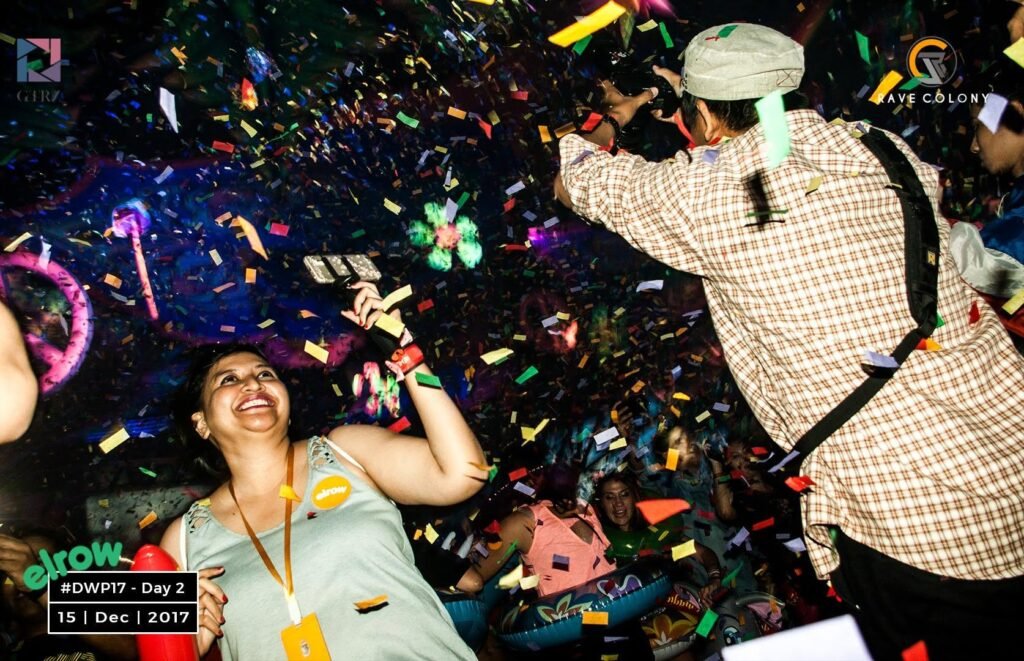
Why people easily get an awe in festivals?
For many people, the strongest memories from music festivals come from moments that are hard to explain in the moment.
Seeing a huge stage for the first time counts. Hearing a favourite artist live counts too.
So does finally experiencing a set they’ve waited years for.
Psychologists describe this feeling as awe.
It’s an emotional response that happens when something feels so vast or extraordinary that it exceeds what we normally expect.
Music festivals are especially capable of creating that response. Their scale, sound, visual production, and shared experience all play a part.
At events such as Tomorrowland and Electric Daisy Carnival (EDC), that combination comes into play often.
It can turn a single performance or stage reveal into something bigger. That moment ends up feeling like much more than just another set.
That’s part of why certain festival moments stay so clear in memory long after the event ends.
What Awe Actually Means
What separates these moments from ordinary excitement comes down to how psychologists understand awe itself.
In a foundational theory by Dacher Keltner and Jonathan Haidt, awe gets linked to two central features: perceived vastness and a “need for accommodation.”
Vastness can be physical. That’s easy to understand when someone sees the Tomorrowland Mainstage in person for the first time.
But it can also describe an experience that feels far bigger than what someone normally encounters.
The scale of a music festival can contribute to that feeling.
So can the size of the production, and the thousands of people gathered around the same performance.
Together, they create a sense that what’s happening in front of you exceeds everyday experience
The “need for accommodation” goes a step further. It refers to moments that don’t fit neatly into what we already expected or imagined.
Someone may have watched festival sets online for years, or followed Calvin Harris, Martin Garrix, or Swedish House Mafia long before finally seeing them on a major festival stage.
Yet the real experience brings in the volume, production, physical presence, and scale that a screen can’t fully reproduce.
Experiencing all of that in person can feel both familiar and much bigger than expected.
That’s where awe begins to separate that moment from simply enjoying another set at a music festival.
Why It Can Make Us Feel Completely Present
Once awe gets triggered, it can begin to affect where our attention goes.
An fMRI study found lower activity in several regions of the default mode network, which is associated with self-reflection and mind-wandering, while participants watched awe-inducing videos.
Researchers compared absorbed viewing with a task that required participants to count changes in camera perspective.
The findings suggested something. Awe was linked to deeper attention toward the experience itself.
That kind of absorption is easy to recognise during music festivals, especially during performances where there’s already a lot competing for the senses.
Watching Eric Prydz HOLO at Coachella can pull attention completely into the music and visuals.
So can standing inside the scale of Ultra Music Festival, or hearing a track such as Avicii’s “Levels” played across a festival.
In those moments, checking a phone, thinking about time, or worrying about what comes next briefly falls away.
Research has also connected awe with a smaller sense of self.
That may help explain why people can feel intensely present while also feeling like one small part of something much larger happening around them.
The brain hasn’t stopped working during those moments. Its attention has simply become far more concentrated on the experience unfolding in front of it.
Read more: Tron: Legacy Influenced Random Access Memories
Why Awe Can Feel So Personal
The same festival moment won’t necessarily create the same sense of awe for everyone.
Partly, that’s because people come into it with very different expectations and histories with the music they’re hearing.
Familiarity might seem like it should reduce awe, since something experienced repeatedly becomes less likely to challenge what we already know.
Yet music complicates that relationship, because knowing a track, artist, or performance history well can also make seeing it live more meaningful.
Hardwell’s return at Ultra Music Festival in 2022 meant something very different to people who had followed him before he stepped away from touring.
Daft Punk’s 2006 Coachella performance showed how familiar music could create a completely new experience.
Audiences saw the duo’s iconic pyramid production for the first time.
That personal history becomes even more significant with Avicii, whose music can now bring back memories of both his career and the years since his death.
At Tomorrowland in 2018, artists including Nicky Romero, Axwell Λ Ingrosso, Don Diablo, and Dimitri Vegas & Like Mike paid tribute to Avicii.
During Nicky Romero’s Mainstage set, a giant Swedish flag featuring Avicii’s image spread across the audience.
People who had seen Avicii perform at Tomorrowland years earlier may have experienced something different after his death.
Hearing tracks such as “Levels” at the festival could bring back memories of those original performances.
At the same time, the song carried a very different meaning in the same setting.
A track once connected to seeing Avicii perform could now also bring back the loss of an artist they could no longer see live.
That shows how personal history can influence why one familiar festival moment creates a much stronger sense of awe than another.
What Makes It So Powerful at Festivals
That’s ultimately what makes awe such a powerful part of the music festival experience.
The moments that affect us most are rarely only about what’s happening on stage.
They can carry years of anticipation and memories tied to particular songs.
For a few minutes, they can also create the feeling of experiencing something much bigger than everyday life.
It helps explain why someone can attend dozens of sets across a festival weekend and still remember one specific moment long afterward.
The music, setting, and feeling of being there can remain unusually clear.

A bunch of electronic dance music lovers who wants to share news from Indonesia to the world.