
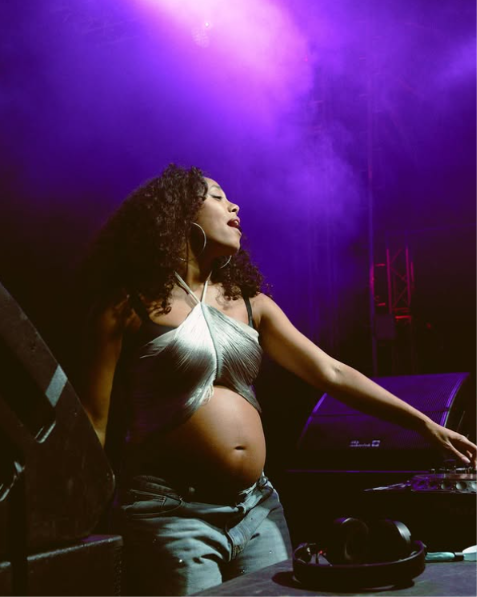
Canadian DJ and producer Jayda G believes motherhood is still not fully supported in electronic music, despite growing visibility for women behind the decks.
Audiences embraced her performances during pregnancy.
However, she says the industry still has significant work to do before DJ mothers receive the support they need.
Jayda G performed a major livestream in 2024 while she was seven months pregnant.
She expected the appearance to have little impact on her career and even worried it might become a disadvantage.
Instead, fans responded positively and celebrated her pregnancy throughout the performance.
Jayda G Reflects on Pregnancy in Electronic Music
Despite the encouraging response, Jayda G said she struggled to find examples of pregnant DJs when she first learned she was expecting.
Artists such as Annie Mac, Anna Lunoe, and Jamz Supernova had previously spoken about performing while pregnant.
Even so, she found very little visibility for mothers in club culture.
Her own experiences also exposed practical challenges.
During one festival, she had to walk a considerable distance between the transport drop-off point and the stage.
While the route would have been manageable under normal circumstances, it became much more difficult during the later stages of pregnancy.
Jayda G said organizers were generally willing to help after she requested additional assistance.
However, she felt many events had never considered how to accommodate pregnant performers before being asked.
Read more: Void Groove Mini Festival Offers a No-Signal Music Escape
The Industry Still Has Work to Do
The challenges extend beyond logistics.
John Shortell, Equality, Diversity and Inclusion Officer at the Musicians’ Union, believes the music industry still does not adequately support parents, particularly freelancers.
Shortell said some pregnant musicians choose not to disclose their pregnancies because they worry promoters may stop offering bookings.
In other cases, promoters avoid hiring pregnant performers because they mistakenly believe they are protecting them from unnecessary stress.
DJ and promoter Nikki Beatnik has also experienced the industry’s changing attitudes toward mothers.
After giving birth to her son, she noticed a decline in bookings and believes age-related bias toward women played a role.
She also struggled to attract media attention when launching Mums That Rave.
Some outlets rejected the idea because they viewed motherhood and rave culture as incompatible.
Beatnik said negative stereotypes continue to spread online.
She frequently removes abusive comments targeting mothers who continue to perform in clubs.
Visibility Is Improving, but Support Still Lags Behind
More women now appear on festival lineups than they did a decade ago.
However, Jayda G believes motherhood remains largely invisible within electronic music.
Progress has become more noticeable, but practical support has not kept pace with the growing number of women entering the industry.
Organizations, promoters, and artists have started discussing ways to make club culture more inclusive.
Even so, Jayda G’s experience suggests that pregnancy and motherhood continue to present obstacles that many performers still have to navigate on their own.

A bunch of electronic dance music lovers who wants to share news from Indonesia to the world.